Your Roof Is Leaking Right Now: What to Do in the First Hour
Stop the water where it's landing before you worry about where it's coming from. Here's the order that actually works.
September 17, 2026 · 3 min read
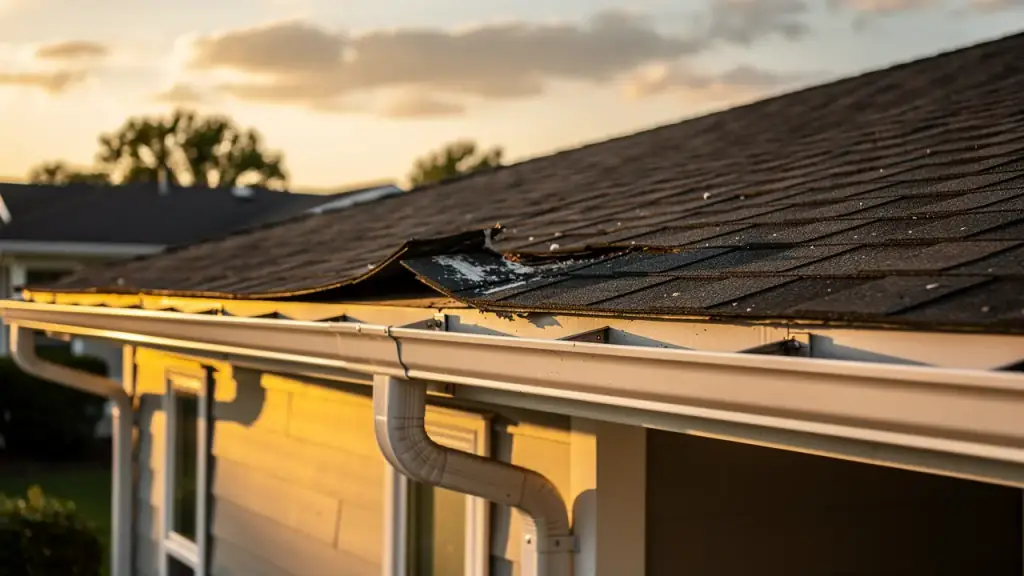
A roof leak during a storm feels like an emergency the moment you see it, and in a real sense it is one. But the first hour matters more for what you do inside the house than anything happening up on the roof, because nobody is safely climbing a ladder in the middle of a storm regardless of how bad it looks.
Stop the water inside first
Get a bucket or a container under the drip immediately. If water is coming through a light fixture or pooling in the ceiling, that's more serious than a simple drip, because trapped water in a ceiling can lead to the ceiling itself failing under the weight. If you see a ceiling bulging or sagging with water, a small controlled hole punched through with something like a screwdriver, over a bucket, releases the water in a way you control rather than waiting for the ceiling to give out on its own. Move anything valuable out from under the leak, and lay down towels or a tarp on the floor to protect flooring while you sort out the rest.
What not to do
Do not go up on the roof during the storm. Wet shingles are one of the more dangerous surfaces to stand on, and no leak is worth a fall. Do not ignore a small drip because it seems minor. Water that's found one way in has usually found more than one path, and what looks like a small drip from a light fixture can be tracking along framing well away from where it first entered the roof. And don't assume the leak is directly above where the water is showing up inside. Water runs along the underside of the decking and along framing before it finds a spot to drip through, so the actual entry point on the roof can be several feet from the stain on your ceiling.
When it's an emergency call, not a Monday call
If water is actively coming into the house, that's an emergency call, not something to wait out until regular hours. Calvin & Son answers regular calls Monday through Friday, 7 to 6, but emergency roofing service doesn't wait for that window. If the leak has slowed to something you can manage with a bucket and it's late at night in the middle of a storm, it's reasonable to wait until morning. If it's actively getting worse, make the call.
Take a few photos while you wait
Once the bucket's in place and you're not actively fighting the water, take a couple of photos of the ceiling stain, the bucket catching the drip, and anything visibly damaged like a light fixture or flooring. You don't need to climb up and photograph the roof itself in the middle of a storm. These photos are mainly for your own records, and if the damage ends up going through insurance, having a timestamp on when it started showing up inside is worth more than trying to remember the details a week later.
What to have ready when you call
- Roughly where inside the house the water is showing up, and whether it's one spot or spreading
- How fast it's coming in: a slow drip versus a steady flow changes how urgent the response needs to be
- Whether you can see any obvious cause from the ground, like a missing section of shingles or a branch that came down on the roof
- Your address and a callback number, since the person answering needs to route the right response to the right house
After the storm passes
Once it's safe, a proper look at the roof happens the way any estimate does, free of charge, with an actual explanation of what failed and why. Sometimes storm damage is a full section of shingles that need replacing. Sometimes it's flashing that worked loose around a vent or chimney and can be resealed. Either way you get told which one it is rather than assuming the worst. Call (918) 458-1023 for emergency service or to get a free look once the weather clears.
Calvin & Son Roofing, (918) 458-1023
Call (918) 458-1023More articles
How to Tell If Your Roof Needs a Repair or a Full Replacement
Sometimes the answer is a full tear off. Sometimes it's a vent pipe seal and you're sent on your way. Here's how that decision actually gets made.
What Actually Happens During a Roof Tear Off, Day by Day
From the first shingle off to the magnet sweep at the end, here's what a tear off actually looks like on your house.